Opening Dua’s
Suggestions when beginning a speech
It is desirable that any speech should begin with the praise (al-hamd) of Allah. It is also desirable to send salawaat upon the Prophet saws, and some form of istighfaar (asking the forgiveness of Allah).

Innal hamda lillah nahmaduhu wa nasta’eenuhu wa nastaghfiruhu wa na’oodhu billahi min shuroori anfusinaa wa min sayyi-aati a’maalinaa; man yahdillahu falaa mudilla lah, wa man yudlil falaa haadiya lah; wa ash-hadu allaa ilaaha illa Allahu wahdahu laa shareeka lah, wa ash-hadu anna Muhammadan ‘abduhu wa rasooluh.
(Verily all praise is for Allah, we praise Him and seek His aid and ask for His forgiveness and we seek refuge with Allah from the evils of ourselves and our evil actions. Whomever Allah guides there is none who can misguide him, and whomever Allah misguides there is none who can guide him, and I bear witness that none has the right to be worshiped except Allah alone, having no partner, and I bear witness that Muhammad is His slave and His Messenger). For reference see – Sahih Muslim, Book 4, Hadith 1888 (People of Dimad)

Ash-hadu alla ilaha illallah, wa ash-hadu anna Muhammadar-Rasulullah
“I bear witness that there is no god except Allah- alone without any partners. And I bear witness that Muhammad is His ‘abd (servant) and Messenger.”
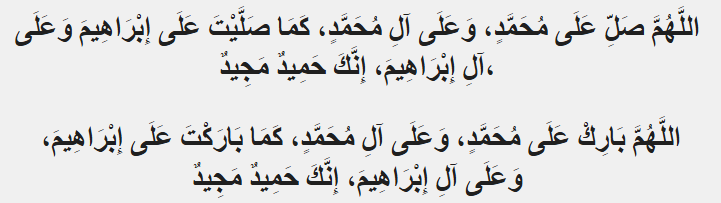
“Allaahumma salli ‘ala Muhammad wa ‘ala Aali Muhammad kama salayta ‘ala Ibrahim wa ‘ala aali Ibraaheem innaka hameedun majeed,Allahumma baarik ‘ala Muhammad wa ‘ala Aali Muhammad kama baarakta ‘ala Ibrahim wa ála aali Ibraaheem innaka hameedun majeed.
O Allah! Send Your Mercy on Muhammad and on the family of Muhammad, as You sent Your Mercy on Abraham and on the family of Abraham, for You are the Most Praise-worthy, the Most Glorious. O Allah! Send Your Blessings on Muhammad and the family of Muhammad, as You sent your Blessings on Abraham and on the family of Abraham, for You are the Most Praise-worthy, the Most Glorious.’ (Sahih Bukhari)

Qaala Rabbish rah Li Sadree, Wa yassir Li Amree, Wahlul ‘Uqdatan Milli saanee, yafqahu Qawlee
(Oh Allah, I ask you to expand my breast, make my task easy, undo the knot in my tongue so that my speech will become comprehensible) (Moses prayer).
Surah As-Saffat 37:180-182
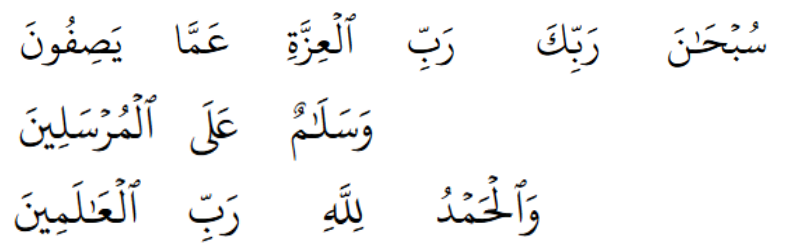
Subhaana rabbika rabbil’izzati ‘ammaa yasifoon. Wasalaamul ‘alal mursaleen. Walhamdu lillaahi rabbil ‘aalameen.
“Glory be to your Lord, the Lord of Might above what they describe. And peace be upon those sent. And praise be to Allah, the Lord of the worlds.”
Recite Surah Al Fatiha

Make Dua as a Group
Benefits of Reciting 99 Names of Allah
Closing Dua
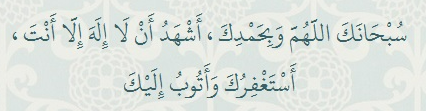
Abu Hurairah (May Allah be pleased with him) reported: Messenger of Allah ﷺ said, “Whoever sits in a gathering and indulges in useless talk and before getting up supplicates: ‘Subhanaka Allahumma wa bihamdika, ash-hadu an la ilaha illa Anta, astaghfiruka wa atubu ilaika (O Allah, You are free from every imperfection; praise be to You. I testify that there is no true god except You; I ask Your Pardon and turn to You in repentance),’ he will be forgiven for (the sins he may have intentionally or unintentionally committed) in that assembly”. At-Tirmidhi.
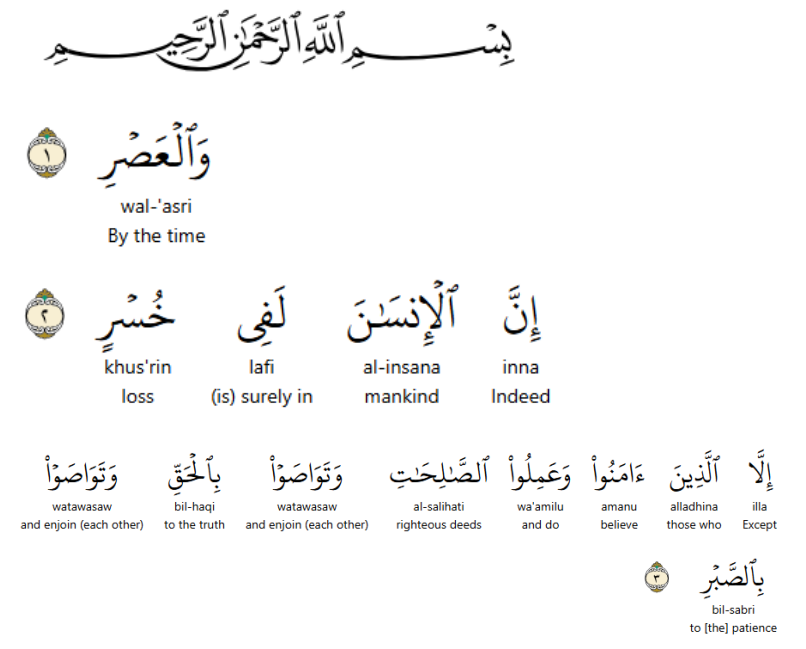
Conclude with Surah Al-‘Asr (surah 103)